
Public health research improves population well-being, reduces disease burden and informs evidence-based policy. As health systems face emerging infectious diseases, mental-health pressures, climate change, health inequities and rising chronic disease, students and researchers have a real opportunity to generate knowledge that matters. This guide presents 50 timely, researchable public health topics for 2026, plus guidance on choosing a strong one.
Public health research landscape in 2026
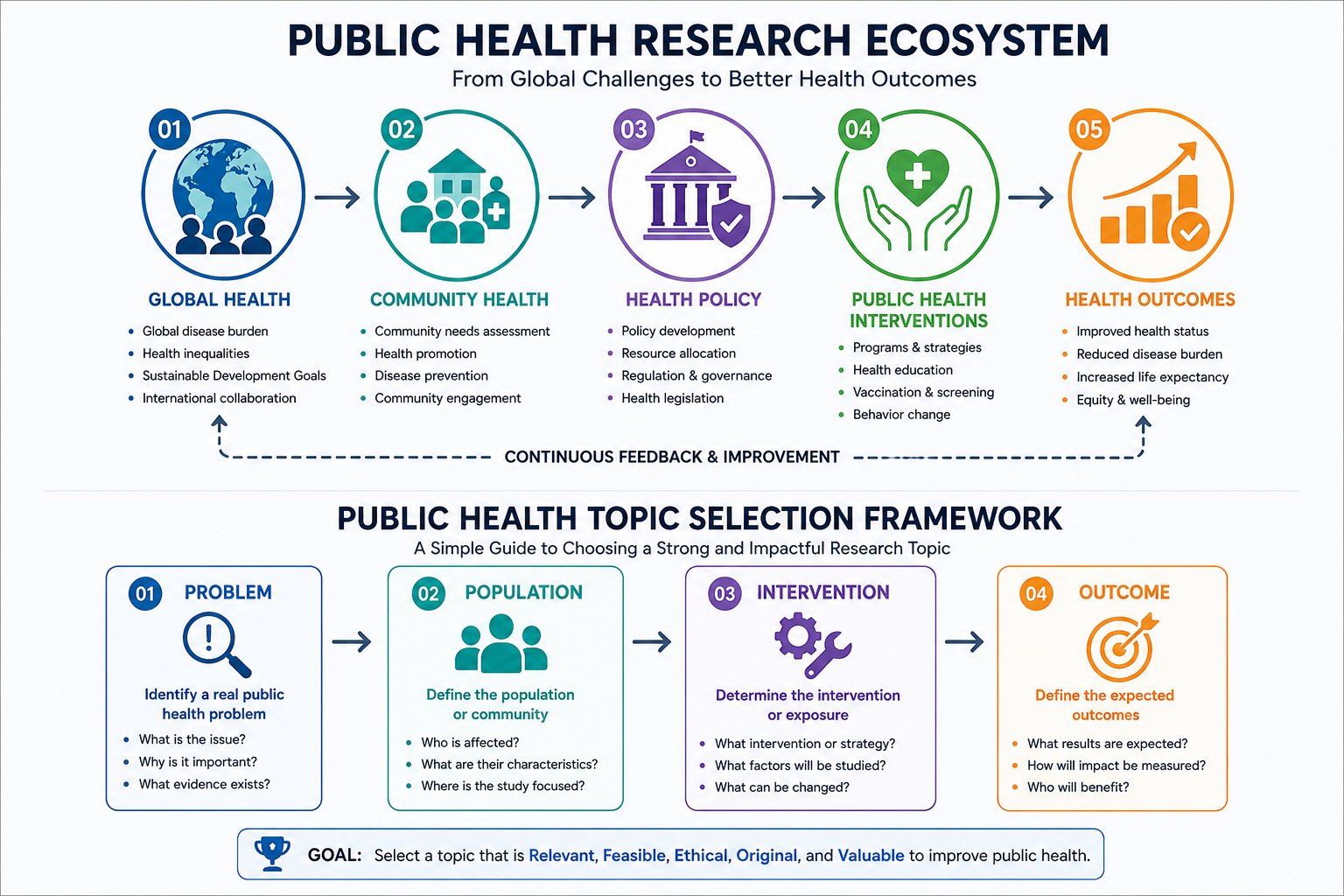
Public health is increasingly interdisciplinary, blending epidemiology, digital health, behavioural science, health economics, environmental studies and policy analysis. Five trends stand out: digital health and AI (telemedicine, surveillance), mental health and well-being, climate change and health, health equity and the social determinants of health, and the prevention of non-communicable diseases.
Major public health research areas
Strong topics usually sit within one of these areas: epidemiology (disease patterns, risk factors, surveillance), maternal and child health, mental health, nutrition and food security, infectious diseases, non-communicable diseases, health policy and management, and digital health. Choose the area that fits your interest and the data you can realistically access.
Top 50 research topics in public health for 2026
Epidemiology
- Risk factors associated with hypertension among adults.
- Prevalence and determinants of diabetes among urban populations.
- Epidemiological patterns of malaria infection.
- Factors influencing vaccine uptake.
- Predictors of chronic-disease management outcomes.
Maternal and child health
- Determinants of antenatal care attendance.
- Factors affecting institutional deliveries.
- Childhood immunisation coverage and barriers.
- Maternal nutrition and birth outcomes.
- Breastfeeding practices among nursing mothers.
Mental health
- Social media use and mental health among university students.
- Workplace stress and employee productivity.
- Mental health literacy among adolescents.
- Barriers to accessing mental health services.
- Prevalence of anxiety among healthcare workers.
Nutrition and food security
- Dietary habits and obesity among university students.
- Food insecurity and academic performance.
- Nutritional status of children under five.
- Impact of nutrition-education programmes.
- Factors influencing healthy eating behaviours.
Infectious diseases
- Community knowledge of malaria prevention.
- Tuberculosis treatment adherence.
- HIV testing behaviours among young adults.
- Vaccine hesitancy and public health outcomes.
- Preparedness for future disease outbreaks.
Non-communicable diseases
- Hypertension management in primary care.
- Community-based diabetes prevention programmes.
- Lifestyle modification and cardiovascular-risk reduction.
- Obesity interventions among adolescents.
- Physical activity and chronic-disease prevention.
- Cancer-screening uptake and barriers.
Health policy and management
- Health-insurance enrolment and utilisation.
- Progress toward universal health coverage.
- Out-of-pocket spending and catastrophic health expenditure.
- Quality of care in primary health facilities.
- Health-workforce retention in rural areas.
- Health-system preparedness for emergencies.
Digital health
- Telemedicine adoption and patient outcomes.
- mHealth apps for chronic-disease self-management.
- Electronic health records and quality of care.
- Artificial intelligence in disease surveillance.
- Digital health literacy among patients.
Environment, climate and equity
- Climate change and vector-borne disease patterns.
- Air pollution and respiratory health.
- Access to clean water, sanitation and hygiene.
- Heat stress and occupational health.
- Socioeconomic status and healthcare access.
- Gender disparities in health outcomes.
- Urban–rural disparities in service utilisation.
- Health-seeking behaviour among underserved populations.
Turn a topic into a study
We help you refine a public health topic, design the methodology and run the analysis (SPSS, STATA, R) with clear interpretation.
Get Research & Analysis Help WhatsApp UsHow to choose a strong public health research topic
A theme is not yet a topic. Narrow it with a clear problem, population, intervention or exposure, and outcome — the same logic clinicians use with the PICO framework. Then confirm the topic is relevant, feasible, ethical, original and valuable.
Once your topic is set, the next steps are a focused proposal and a defensible methodology — see our guides on writing a winning research proposal and choosing quantitative or qualitative methods.
Public health offers some of the most impactful research opportunities available. Pick a topic that genuinely interests you, fills a real gap and is feasible with your data and timeline. WIStat Research supports public health and epidemiology projects from topic to publication — including proposal writing, data analysis and publication support.