
Psychology explores human thoughts, emotions, behaviour and mental processes — and the field is evolving fast. In 2026, researchers are examining digital technologies, artificial intelligence, social media, workplace well-being and human development across the lifespan. Whether you need a final-year project, a dissertation topic or a publishable PhD area, this guide offers 50 strong psychology research topics plus advice on choosing one.
Emerging trends in psychology
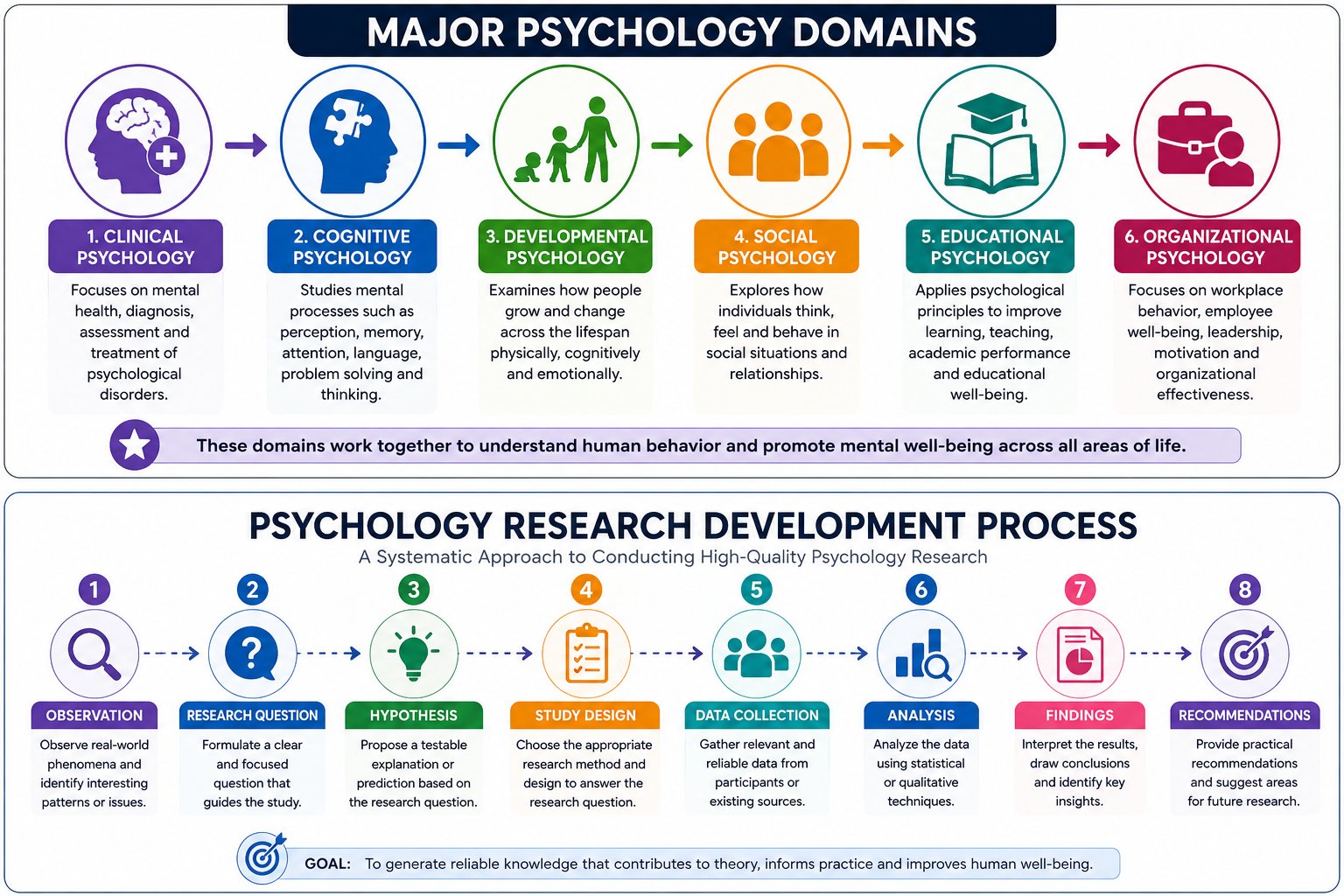
Key 2026 priorities include mental health and well-being (depression, anxiety, stress, resilience), digital psychology (social media and smartphone behaviour), educational psychology, workplace psychology, and AI and human behaviour (how AI shapes decision-making, learning and communication).
Top 50 psychology research topics for 2026
Mental health
- The relationship between social media use and anxiety among university students.
- Factors influencing depression among young adults.
- Workplace stress and employee productivity.
- Burnout among healthcare professionals.
- Mental health stigma and help-seeking behaviour.
- Effects of mindfulness interventions on stress reduction.
- Coping mechanisms among postgraduate students.
- Sleep quality and psychological well-being.
- Psychological effects of unemployment.
- Mental health literacy among adolescents.
Social media and behaviour
- Social media addiction and academic performance.
- Cyberbullying and adolescent mental health.
- Social comparison and self-esteem.
- Digital communication and relationship satisfaction.
- Influence of influencers on consumer behaviour.
- Smartphone dependence among students.
- Online identity formation among adolescents.
- Social media and body-image concerns.
- Short-video use and psychological well-being.
- Digital detox and mental health outcomes.
Workplace psychology
- Leadership styles and employee engagement.
- Job satisfaction among remote workers.
- Work–life balance and organisational commitment.
- Employee motivation and productivity.
- Workplace diversity and employee performance.
- Emotional intelligence and leadership effectiveness.
- Organisational culture and job satisfaction.
- Workplace bullying and employee well-being.
- Psychological safety in organisations.
- Flexible work arrangements and employee performance.
Child and developmental psychology
- Parenting styles and academic achievement.
- Childhood trauma and psychological development.
- Effects of screen time on child development.
- Emotional intelligence among adolescents.
- Peer influence and adolescent behaviour.
- Child resilience in challenging environments.
- Family structure and psychological well-being.
- Academic stress among secondary-school students.
- Self-esteem development during adolescence.
- Emotional regulation among young children.
Educational psychology
- Academic motivation and student performance.
- Online learning and student engagement.
- Classroom climate and academic achievement.
- Teacher support and student motivation.
- Learning styles and academic success.
Artificial intelligence and human behaviour
- Student perceptions of AI-assisted learning.
- Trust in artificial-intelligence systems.
- AI chatbots and customer satisfaction.
- Ethical concerns surrounding AI adoption.
- Human decision-making in AI-supported environments.
Need help designing your study?
From research questions to analysis (surveys, experiments, thematic coding), our team supports psychology projects at every level.
Get Methodology & Analysis Help WhatsApp UsThe psychology research development process
High-quality psychology research follows a systematic path — from observation and a focused question, through a testable hypothesis and sound study design, to data collection, analysis, findings and recommendations.
How to choose a strong psychology research topic
Choose a topic that is relevant, genuinely interesting to you, feasible with your time and access to participants, addresses a clear research gap, and is publishable. Avoid the common traps: overly broad topics, thin literature, weak design and limited participant access. For the next steps, see our guides on writing a strong literature review and writing a winning research proposal.
Psychology offers countless impactful research opportunities. WIStat Research supports psychology students and researchers with topic selection, proposal writing, data analysis, academic editing and publication support.