
Business Administration shows how organisations operate, compete, innovate and create value. As firms navigate digital transformation, AI, sustainability, globalisation and financial uncertainty, demand for high-quality business research keeps growing. This guide offers 75 researchable topics for undergraduate projects, master’s and MBA dissertations and PhD studies — plus advice on choosing a publishable one.
Business research trends in 2026
Major trends shaping business research include digital transformation, artificial intelligence in business, sustainable business practices and ESG, employee well-being, and data-driven decision-making.
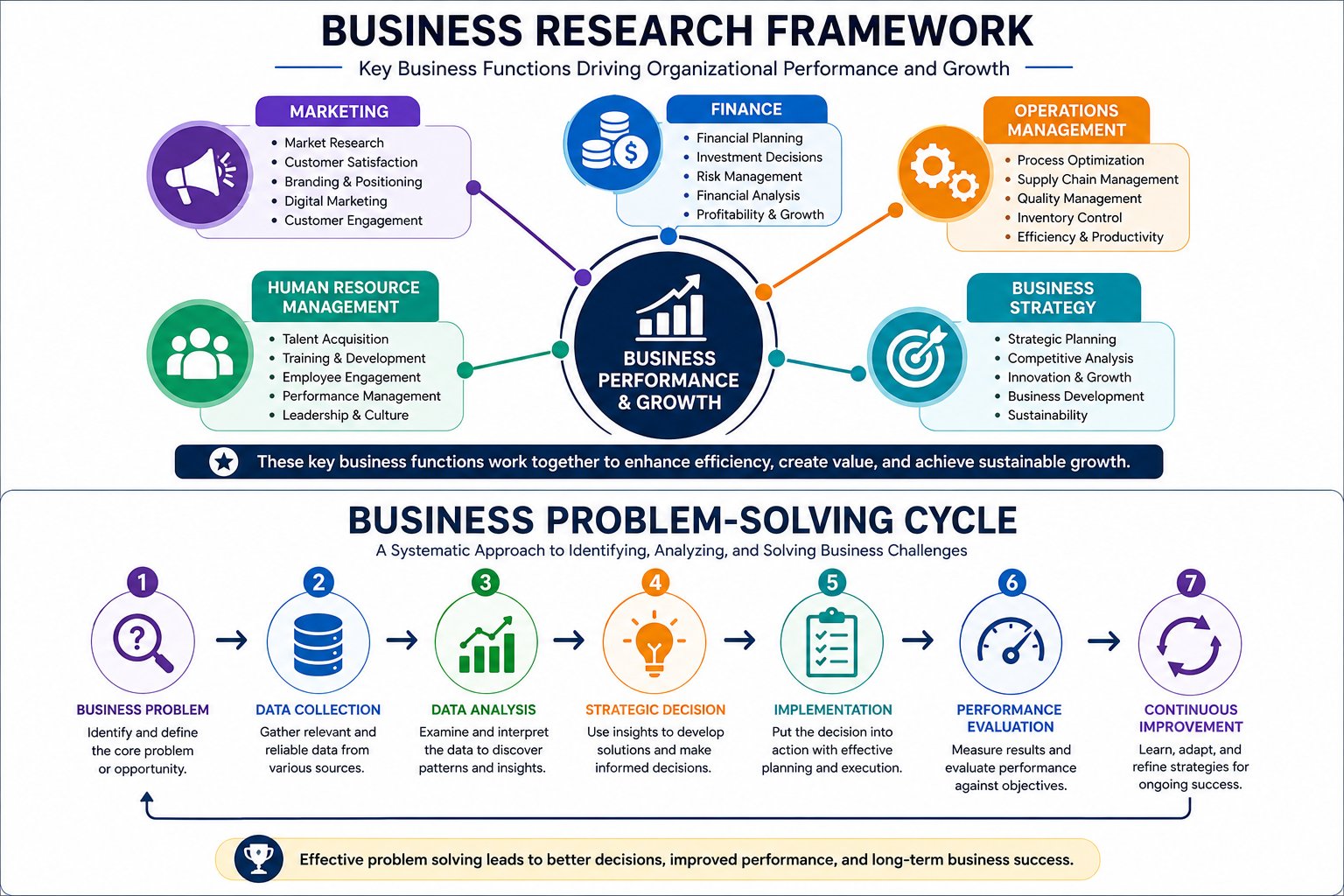
Top 75 research topics in business administration
Human resource management
- Employee engagement and organisational performance.
- Leadership styles and employee productivity.
- Workplace diversity and innovation.
- Talent-management practices and retention.
- Employee motivation and job satisfaction.
- Flexible work arrangements and performance.
- Emotional intelligence and leadership effectiveness.
- Employee training and organisational productivity.
- Workplace stress and employee well-being.
- Organisational culture and employee commitment.
Marketing
- Social media marketing and customer engagement.
- Digital marketing strategies and sales performance.
- Brand loyalty among young consumers.
- Influencer marketing effectiveness.
- Customer relationship management and retention.
- Consumer purchasing behaviour in online markets.
- Brand reputation and customer trust.
- Mobile marketing and consumer engagement.
- Customer satisfaction and repeat purchases.
- Content marketing and brand awareness.
Entrepreneurship
- Entrepreneurial intention among university students.
- Factors influencing startup success.
- Innovation and small-business growth.
- Entrepreneurial leadership and business performance.
- Challenges facing small and medium enterprises.
- Access to finance and entrepreneurial success.
- Family-business sustainability.
- Women entrepreneurship and business growth.
- Youth entrepreneurship and employment creation.
- Business incubation and startup development.
Finance
- Financial literacy and investment decisions.
- Corporate governance and financial performance.
- Risk-management practices and profitability.
- FinTech adoption and financial inclusion.
- Capital structure and firm performance.
- Dividend policy and shareholder value.
- Investment behaviour among retail investors.
- Financial planning and business sustainability.
- Credit management and business performance.
- Working-capital management and profitability.
Supply chain and operations
- Supply-chain resilience during disruptions.
- Inventory management and organisational performance.
- Logistics efficiency and customer satisfaction.
- Procurement practices and cost reduction.
- Lean management and operational efficiency.
- Technology adoption in supply-chain management.
- Sustainable supply-chain practices.
- Supplier-relationship management.
- Quality management and customer satisfaction.
- Warehouse management and operational performance.
Digital business
- Artificial intelligence and business decision-making.
- E-commerce adoption and organisational growth.
- Business analytics and strategic decision-making.
- Digital transformation and competitiveness.
- Cybersecurity and organisational performance.
- Cloud-computing adoption among SMEs.
- Customer experience in digital environments.
- Mobile commerce and consumer behaviour.
- Digital innovation and organisational success.
- Chatbots and customer satisfaction.
Corporate governance and strategy
- Corporate social responsibility and brand image.
- Ethical leadership and employee trust.
- Strategic planning and organisational performance.
- Governance practices and business sustainability.
- Board diversity and firm performance.
- Organisational resilience during crises.
- Strategic innovation and competitiveness.
- Change management and employee adaptation.
- Business ethics and stakeholder satisfaction.
- Corporate governance and investor confidence.
Emerging business topics
- Artificial intelligence and workforce transformation.
- Green business practices and sustainability.
- ESG reporting and organisational reputation.
- Remote work and organisational productivity.
- Digital disruption and business-model innovation.
Researching business — or writing one?
From dissertation analysis to investor-ready business proposals, we support both academic and commercial business writing.
Get Business Support WhatsApp UsThe business problem-solving cycle
Good business research mirrors how organisations solve problems: define the problem, collect data, analyse it, decide, implement, evaluate and improve.
How to choose a publishable business research topic
A strong topic is relevant, practical, original, feasible and publishable. Narrow it to a specific industry, population and context, and confirm the gap in recent literature. Avoid overly broad topics, weak problem statements and limited data availability. For the next stages, see our guides on quantitative vs qualitative methods and writing a strong literature review, and our related list of top business and management topics.
Business Administration offers exciting, practical research opportunities. WIStat Research supports business students and professionals with topic selection, proposals, data analysis and editing.